Breaking

Showing posts with label Datsun Cars. Show all posts

Thursday, September 24, 2026

September 24, 2026

Datsun’s Lost Future: The Concept Cars That Imagined Tomorrow


Datsun is best remembered for cars such as the 240Z, 510 and Sunny, but the brand’s history is also connected to a fascinating world of experimental automotive design. During the 1970s, Nissan and Datsun explored unusual concepts that looked far beyond the conventional cars of their time. These prototypes experimented with futuristic styling, unusual layouts and technology that seemed years ahead of production vehicles.

One of the most striking examples was the Nissan 126X, unveiled in 1970. Although officially a Nissan concept, it later became associated with the Datsun name through its Matchbox model. The wedge-shaped vehicle featured a dramatic canopy-style entrance rather than conventional doors. It also used colored lights to communicate what the car was doing: different colors indicated acceleration, cruising or braking. The concept was powered by a transversely mounted 3.0-liter six-cylinder engine and featured all-wheel drive.

When Futuristic Design Met Practical Ideas

The 126X was not simply about appearance. Its designers were exploring how a car could communicate with pedestrians and other road users. At a time when road safety and pollution were becoming major concerns in Japan, manufacturers were investigating new approaches to vehicle design and technology. Nissan's own history records that the 1970s brought increased attention to traffic accidents, pollution and fuel efficiency.

Another interesting example from the same era was the Nissan AD-1 concept, presented in 1975. It was a compact two-seat sports prototype with a mid-mounted 1.4-liter engine, lightweight construction and an aerodynamic body. Its unusual proportions and futuristic details demonstrated how Japanese designers were experimenting with smaller, more efficient performance cars.


The Ideas That Survived

Not every concept became a production car, but that does not make these projects unimportant. Concept vehicles allowed designers to test ideas without the limitations of mass production. Some experimented with aerodynamics, unusual doors and futuristic interiors, while others explored how safety and efficiency could influence styling.

Meanwhile, production Datsun models were developing in a more practical direction. The Datsun Sunny 1200, introduced in 1970, combined compact dimensions with a 1.2-liter engine and was offered in several body styles. Nissan's heritage collection shows how the Sunny became an important part of the company's small-car lineup.

The contrast is what makes Datsun's history particularly interesting: one side focused on affordable everyday transportation, while another explored what the car of the future might look like.

Today, these forgotten prototypes provide a glimpse into automotive thinking from decades ago. Some ideas disappeared completely, while others influenced later approaches to design, safety and technology. For Datsun enthusiasts, they offer a different way to understand the brand—not just through the cars that reached showrooms, but through the ambitious ideas that remained on the drawing board or inside concept-car collection. 

Sunday, August 16, 2026

August 16, 2026

Classic Legacy Meets a Changing Automotive Future


Datsun continues to attract attention among car enthusiasts in 2026, even though the brand is no longer producing new cars. Once one of Japan’s best-known automotive names, Datsun has an interesting history that stretches from classic sports cars to affordable modern vehicles. Today, much of the interest surrounding Datsun comes from its iconic heritage and speculation about whether the name could ever return.

For current buyers, however, there is an important point to remember: Datsun does not currently have a confirmed new-car lineup. Nissan discontinued the revived Datsun brand after several years of selling budget-focused vehicles in emerging markets. In India, production of Datsun models ended in 2022, with the GO, GO+ and redi-GO becoming discontinued models.

The Datsun name remains particularly popular because of its classic performance cars. Models such as the Datsun 240Z have become highly desirable among collectors and enthusiasts. The 240Z combined Japanese engineering with sporty styling and relatively accessible performance, helping establish a strong reputation for Japanese sports cars internationally. Today, well-preserved examples and carefully restored Datsun classics continue to appear at automotive events and collector gatherings.


Datsun's more recent history is equally interesting. Nissan revived the brand in 2013 as a low-cost automobile marque aimed at emerging markets. India became one of its important markets, with the Datsun GO arriving in 2014, followed by the GO+ and redi-GO. The company positioned these cars around affordability and practical everyday transportation.

Despite the brand's discontinuation, Datsun still occasionally appears in automotive discussions. Some online reports and concept videos have imagined modern Datsun models featuring retro styling, electric powertrains and advanced technology. However, these concepts should not be confused with official Nissan announcements. Current automotive databases do not list confirmed upcoming Datsun production models for India, and there is no established official launch schedule for a Datsun comeback.

Interestingly, Nissan itself is continuing to explore designs that draw attention from enthusiasts. The company is preparing new products across electric, hybrid and traditional powertrain categories, while also developing models such as the upcoming Xterra off-roader. Nissan has said the new Xterra is planned for 2028, although it is a Nissan vehicle rather than a Datsun revival.

For Datsun fans, the biggest attraction therefore remains the brand's heritage. Classic models can still be found in enthusiast communities, restoration projects and collector markets. Their simple mechanical character and distinctive designs make them especially interesting at a time when modern cars are increasingly dependent on electronics and software.

The future of Datsun remains uncertain, but its legacy is far from forgotten. Whether Nissan eventually decides to revive the name or not, classic Datsun models continue to influence automotive culture. For now, enthusiasts will have to rely on existing classics, restored examples and future possibilities rather than an officially confirmed new Datsun car.

Wednesday, February 25, 2026

February 25, 2026

🚗 Datsun Cars: Legacy, Updates & What’s Next in 2026

📜 A Storied Automotive Brand

Datsun is a name that evokes nostalgia for many car lovers. Originally launched in 1931, Datsun became known worldwide as the export arm of Japanese manufacturer Nissan, offering value-oriented, reliable cars and light trucks for global markets. From the early Sunny and Bluebird models to the iconic 240Z sports car, Datsun earned a reputation for dependable engineering and enthusiast appeal.

After decades of success, Nissan phased out the original Datsun nameplate in 1986 as part of a global rebranding effort under the Nissan name.


🔄 The Modern Revival — And Quiet Exit

In 2013, Nissan relaunched the Datsun brand with a focus on affordable, entry-level cars targeted at emerging markets such as India, Indonesia, Russia, Nepal and South Africa. The first car to roll out from this renewed line-up was the Datsun GO — a compact hatchback designed to compete with other budget-friendly models in cities across Asia and Africa.

Following this launch, Datsun expanded its portfolio with cars like the GO+ MPV and redi-GO hatchback, aiming to capture buyers looking for basic mobility and low ownership costs.

At its peak, this revived brand sold hundreds of thousands of vehicles, demonstrating that there was still appetite for the Datsun name — but it struggled to make a sustainable dent in highly competitive markets dominated by established players.

However, global shifts in customer preferences toward SUVs and crossovers — and Nissan’s shifting strategy — changed the brand’s course once again. By 2022, Nissan had officially discontinued the Datsun brand worldwide, including in India, ending new production of models like the redi-GO, GO and GO+.


📉 Why Datsun’s Dream Didn’t Last

Despite its long heritage and revival efforts, Datsun faced several challenges:

  • Intense competition — especially from dominant players in entry-level segments.

  • Shifting market trends, with buyers increasingly choosing SUVs over hatchbacks.

  • Corporate strategy changes at Nissan that prioritized core models and profitability over niche sub-brands.

Still, existing Datsun owners continue to enjoy their vehicles with after-sales support, parts and service — even as the automotive world evolves beyond the brand.


🔮 What’s on the Horizon?

Although Datsun is no longer an active brand, there’s renewed interest on forums and among classic car fans, especially around vintage models like the 240Z and early Sunny cars. These classics carry a loyal following among collectors and automotive history enthusiasts.

Rumours occasionally surface about Nissan leveraging nostalgic badges or concepts in limited editions, but nothing official has been announced as of 2026. Meanwhile, Nissan itself continues to expand its footprint with new and refreshed models in the global market — but under its own name rather than Datsun.


🚘 Final Drive

Datsun’s story is one of innovation, reinvention and transformation — from early exports to global renown, a modern revival, and an eventual sunset. For many car lovers, the name still represents affordable motoring with heart and character. As Nissan charts its future, the legacy of Datsun lives on in classic cars, enthusiast communities, and automotive history.

Monday, May 6, 2024

May 06, 2024

Top SUVs and Trucks With Off-Road Capabilities for 2024


The market for off-road vehicles has flourished! More individuals than ever appear to be interested in going off the usual route. Consequently, manufacturers have had to adjust to the needs and desires of their customers.

Everywhere we look, we see tough cars with four-wheel drive and elevated ride heights. But most of these machines, for all their hairy-chested good looks, can hardly make it across a gravel parking lot.

We'll examine the cars that can support their aesthetics here. These are the top SUVs and trucks for off-roading that will be available in 2024.

The Jeep Wrangler

Let's start with the most obvious option, the Jeep Wrangler, and take off the band-aid. The Wrangler has been in production for many years, and its off-road prowess is unmatched.

It has a V6 engine that generates 285 horsepower and about 10 inches of ground clearance as standard. In factory form, it is more capable than any SUV that you're likely to see parked at a mall. Choose the Rubicon if you require more because it has 33-inch mud-terrain tyres, a heavy-duty off-road suspension, locking diffs up front, and rear. Do you still require additional? You'll be happy to hear that the Wrangler offers an extensive assortment of aftermarket components.


Sasquatch Package-equipped Ford Bronco

Even though it has been available for a few years, the Ford Bronco is still a relatively new off-road SUV in America. It is believed by some to be superior to the Jeep Wrangler.

Choosing the Sasquatch Package enhances the off-the-beaten-path experience even further. It transforms into an off-road beast with its electronically locked front and rear axles, high clearance suspension, and 35-inch tyres on 17-inch beadlock-capable rims.

Defender from Land Rover

The British Jeep Wrangler and the Land Rover Defender have numerous similarities. It has supporters all over the world, is just as good off-road, has a sizable aftermarket, and enjoys the same iconic reputation.

In terms of comfort and sophistication, the most recent Defender is likewise a huge upgrade over its somewhat rustic predecessor. The 2-door Defender 90 X is the finest option for off-roading since it comes with extra features like wade detecting, hill-descent control, and a two-speed transfer case in addition to what is standard on other Defenders.


Friday, July 23, 2021

July 23, 2021

2022 Jeep Compass mild-hybrid spied sans camouflage

Today we got our first undisguised, but a minuscule piece of camo on the identification, on the Jeep Compass Mild-Hybrid (mHEV) while on a trailer in Metro Detroit. Dissimilar to the Compass 4xe, this model components just one fuel entryway on the traveler side. Stellantis powertrain engineers have been working diligently on growing new answers for the current powertrains. One of those arrangements encompasses the organization's Global Small Engine. 

Dissimilar to the Compass 4xe, this model elements just one fuel entryway on the traveler side. 

Subsequent to substantiating itself in the Renegade and the Fiat 500X hybrid, the 1.3-liter turned out to be essential for the module half breed electric vehicle powertrain for the Jeep Renegade and Jeep Compass 4xe. This year, however, we anticipate that the 1.3 liter should be the excellent motor decision for the gentle crossover rendition of the Compass. 

Anticipate an authority debut before the year's over. 

Force ought to be matched to a Getrag 7-speed, wet double grip, gentle half breed transmission. The transmission could be a refreshed rendition of Getrag's 7-DCT 300 transmission. This transmission is relied upon to have a coordinated electric engine fit for 15 to 25kW of force on a 48-volt gentle half and half framework with the chance of approaching 130kmph on electric force alone. Anticipate an authority debut before the year's over.

Friday, April 17, 2020

April 17, 2020

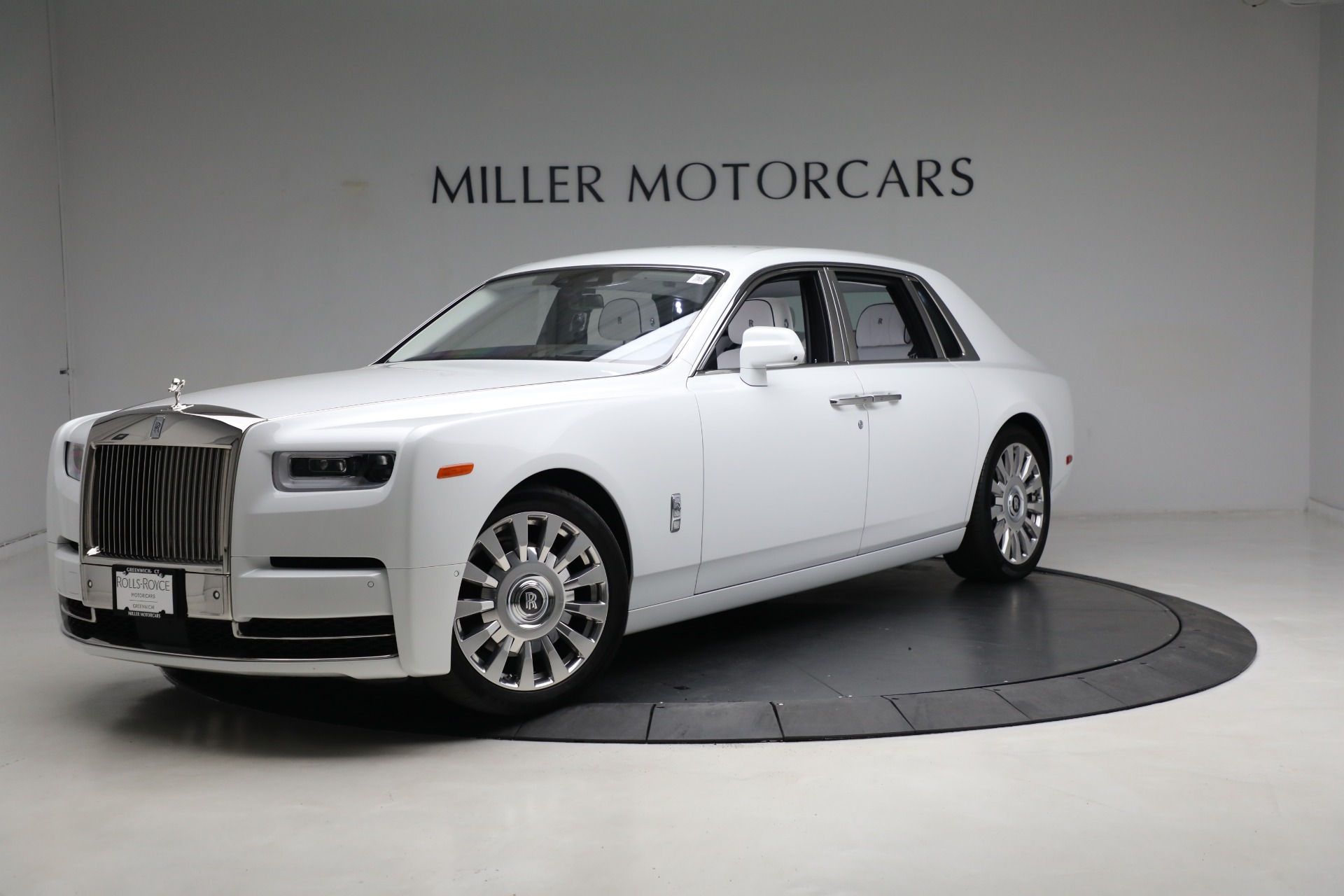
ALL NEW ROLLS ROYCE GHOST TO COME IN 2020


The overhaul of Rolls-Royce’s range will continue early next year with a new generation of the Ghost luxury sedan. The second-generation Bentley Flying Spur rival follows the launch of the Cullinan SUV which came out late last year and the eighth-generation Phantom limo in 2017. The first prototypes of the new Ghost were spotted undergoing development testing and they revealed a typically evolutionary design approach for the British luxury brand. With an intention to retain its familiarity and presence, the luxury sedan will get the signature rear-hinged rear doors and prominent grille design, with modern touches such as ‘laser’ headlights and LED tail-lights. The bigger news is under the skin, as the Ghost will benefit from an all-new bespoke aluminium spaceframe platform.

The outgoing Ghost shares a steel monocoque with the BMW 7 Series, but the new model’s bespoke architecture signifies Rolls-Royce’s greater autonomy from its parent firm. In the Phantom, the platform is claimed to result in a 30 percent improvement in body stiffness over its predecessor. However, given the outgoing car’s relatively modern platform, the rigidity gains for the Ghost are likely to be less. The move from steel to aluminium should also make the 2020 Ghost lighter than the current car, which weighs 2.36 tonnes in standard form and 2.45 tonnes in extended-wheelbase guise. However, Rolls-Royce is likely to offset some of the kerb weight benefit with an increase in technology, equipment and insulation.
   
Spy shots reveal that some of the car’s mechanical development and testing is taking place in BMW’s German facilities, rather than at Rolls-Royce’s Good wood headquarters. A 6.6-litre, twin-turbocharged V12, shared between both brands, was developed to Rolls-Royce’s own specifications and will feature in the Ghost. The engine develops 585hp and 849Nm of torque in the range-topping BMW M760Li xDrive, but sources suggest it could produce more in the new Rolls-Royce. Unlike the outgoing model, the Ghost also looks likely to adopt four-wheel drive, which when mated to a faster-shifting eight-speed automatic gearbox should mean better acceleration. With a decrease in weight and the engine’s greater on-paper efficiency, small fuel economy gains are likely, although extra tank range is more of a priority for Rolls-Royce owners.

The Ghost could use the technological advancements introduced in the latest Phantom and Cullinan. And that includes the 48V electrical architecture, allowing an active anti-roll system, while four-wheel steering should also improve low-speed agility and high-speed stability. The interior of the new Ghost has yet to be seen, but it is expected to reflect the same blend of traditional coach-built material richness and discreet, high-end tech of its current siblings, which means features like digital dials, a head-up display and active safety features, as well as details such as an infotainment screen that electrically slides out of sight when not required.